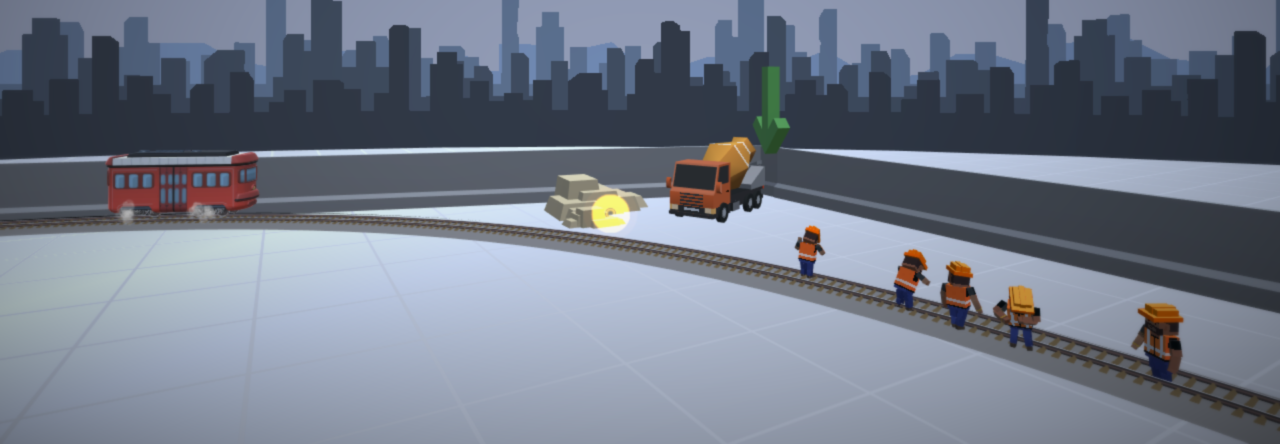
No.
Ideas are not worth much, in fact ideas are so easy to come across that just filtering through good and bad ideas is a challenge unto itself.
Working and teaching in the world of video and board games I am constantly hearing about cool new mechanics and game themes. Sometimes they are really awesome (like a Dune sandworm game) and some are just lame.
Every time we run Board Game Jam we get asked by at least one person (participants and non-participants) if we “keep” the game ideas or can the designers do what they want with the game. The first time I heard that question I guffawed – why on earth would we want other people’s game ideas? What are we going to do with them? We’re not publishers.
People are concerned that their ideas will be pilfered by someone and then that someone will make a ton of cash from that idea. My attitude is that ideas don’t matter; execution does.
Ideas are not IP
Intellectual Property (IP) is a step beyond ideas although it’s common to get the two confused. According to Wikipedia’s take on IP:
“owners are granted certain exclusive rights to a variety of intangible assets, such as musical, literary, and artistic works; discoveries and inventions; and words, phrases, symbols, and designs. Common types of intellectual property rights include copyright, trademarks, patents, industrial design rights, trade dress, and in some jurisdictions trade secrets.”
It’s clear that IP and ideas are both abstract and intangible. Where is the dividing line between IP and ideas though? My understanding is that an idea can only count as IP once it has manifested itself in reality in a set way. This can be through patents, art on a screen, a legal process in a court, etc.
What’s important to note is if you already have your idea proving itself in the world than you are arguably protected by IP laws (which has issues I won’t get into here).
The Onion Talks
The above video is spot on: compost powered cars would be great! This video is worth mentioning here just for the line “The idea is there it just needs implementation.” Even still, a compost powered car is not a very practical idea (yet) and thus it’s comedy. Unfortunately, I have seen presentations that mirror this Onion talk a little too close for comfort. Don’t be like the compost character in the video.
I would be foolish if I didn’t include the talk on social media. “Ideas are inefficiencies.”
What game designers say
It would be foolish to think that games developers don’t build off of and take game ideas or mechanics from each other. Some developers even mention their inspirations with enthusiasm (note Terraria).
Daniel Solis is a board game designer who openly blogs about his designs and process on his website. He recently wrote an article on this issue on ideas and theft. He raises many good points and I particularly like this one below because it reiterates that ideas are only worth something when put into practice.
Ideas don’t reveal emergence.
Even if your idea is 100% original, the idea alone isn’t valuable, it’s the work of revealing emergent properties that makes the idea valuable. Taking Bauza’s Hanabi example again: For a game that elegant, you know there was a lot of time put into every design decision. With so few mechanics, everything becomes that much more important. How many suits should be in the deck? How many cards of each rank should be in the deck? What’s an average score across one hundred games? How do people communicate with each other in play? None of these questions get answered unless the “idea” becomes a reality at the table. There are uncountable emergent properties that just don’t reveal themselves until you playtest.
In essence, the act of even exploring your idea creates new ones!
What’s more, ideas are being given away. It’s not rare to find gamers and game makers encouraging people to take ideas and make them into games.
That all being said, for many in the game in the industry there is a line to cross. That line is when you stop coming up with your own ideas at all and instead you just steal them. The former CEO of Zynga once told his employees to stop coming up with ideas and just steal them from other (and at the time poorer) companies who don’t have as much reach This is one reason there is such detest for Zynga.
Is your idea even yours?
In this crazy hyper modern world of ours is it possible any idea is unique? I know that’s a large question, but hopefully it gets you thinking of originality.
We are heavily influenced by what’s around us and so too our ideas. It’s very easy to observe that popular ideas ebb and flow like with zombies or vampires. If something works – why not roll with it?
Jazz music is notorious for building off of what came before it, what good style doesn’t do this? Good artists see what works and then incorporate it into what they do.


You must be logged in to post a comment.