
Screenshot of the game Maple Resistance showing dialogue spoken by a fictional Donald Trump with text generated by a local LLM.
I built a prototype of a game that explores the takes on of the “bugs” of AI and turns it into a feature. That bug is, of course, hallucinations. The way generative AI works requires hallucinations to function but to the end user the hallucinations can come across as a bug. Hallucinations are what causes the “false truths” and made up facts that generative AI spits out. I started to wonder if there’s a way to make a game in which the hallucinations are beneficial to the play experience.
I want to create more games about policy and possible futures. In the same vain that the military uses war-games to train we ought to use policy-games to train our politicians and bureaucrats. A game gives us a space to experiment what works and doesn’t without actually causing harm to the real world.
With my AI thinking and interest in policy games I decided to make a game set in the year 2025 in which Donald Trump has won the 2024 election. Since Trump makes up facts and losses track of what’s being discussed he and a simple hallucinating AI could be indistinguishable from one another. The” bug” has become the feature.
The player’s goal is to prevent Trump from annexing Canada, so in Maple Resistance you negotiate with an AI Trump while trying to make political choices to protect Canadian sovereignty.
I also integrated a local LLM in the game; read on for why I made this game and what I learned.
It’s worth noting I started working on Maple Resistance at TOJam back in May and since then the world of both AI and politics has evolved (I was originally going to post this on July 15).

Screenshot of the game Maple Resistance showing dialogue spoken by a fictional Donald Trump with text generated by a local LLM.
Maple Resistance: navigating annexation through gameplay
In 2025, the unthinkable happens: Donald Trump, re-elected as President of the United States, declares Canada to be part of the USA, following his successful annexation of Puerto Rico. But this time, there’s no military intervention—just a bold proclamation. This audacious scenario sets the stage for “Maple Resistance,” a text and card-based game that explores the intricate dance of diplomacy, identity, and resistance.

Screenshot of the game Maple Resistance showing dialogue spoken by a fictional Donald Trump with text generated by a local LLM.
Designing dystopia
As a game designer, I like to experiment with new technologies and mechanics. One of my primary goals with Maple Resistance was to experiment with local Large Language Models (LLMs) and Unity to create a narrative experience driven by dynamic, AI-generated dialogue. This worked out. The local LLM worked better than I thought, and given that the LLM I was using is from earlier this year I’m sure that the newer ones are even better. For those that are curious I used Mistral 7B.

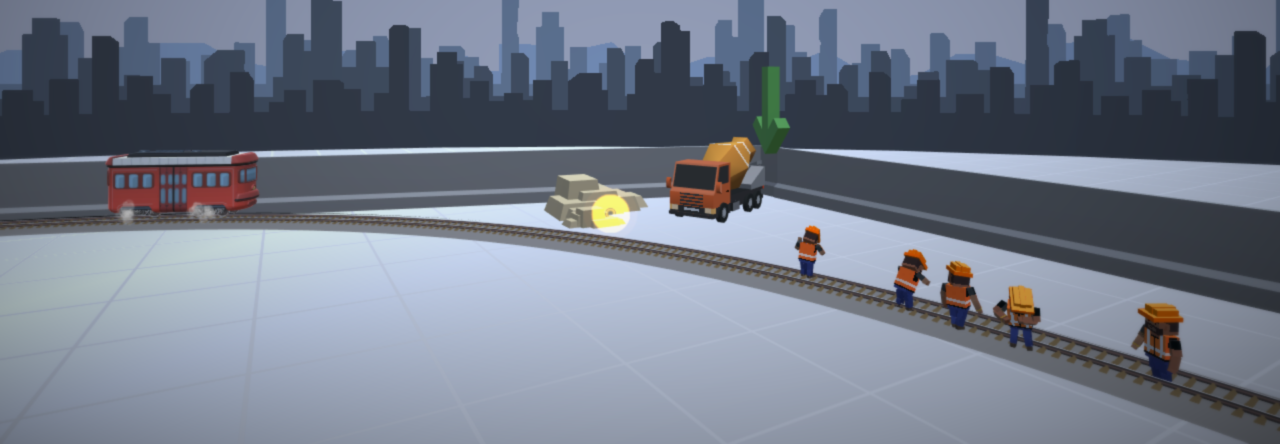
AI generated image with the prompt “What Canada would like if the United States of America annexed Canada in the year 2025”
Card collecting mechanic for conversations
Another experiment was the card-collection mechanic tied to player interactions with NPCs. The idea was simple: engage in conversations, gather information, and earn cards that can be strategically played. While this mechanic had mixed results in its execution, it showed promise. In the “Maple Resistance” prototype, players can collect these cards, though the system is not complete and far short of what I originally envisioned. An interconnected inventory system remains an elusive goal; however, the process has sparked numerous ideas for future iterations.

Screenshot of the game Maple Resistance showing dialogue spoken by a fictional Donald Trump with text generated by a local LLM.
Futurism and the polycrisis
Set against the backdrop of a polycrisis—a convergence of multiple, interconnected crises—the game explores themes of nationalism, sovereignty, and the fragility of political systems. “Maple Resistance” is a speculative narrative that resonates with current global uncertainties, from geopolitical tensions to technological disruptions. It invites players to ponder the future of nations and the delicate balance of power, all within the framework of an engaging, strategic gameplay experience.
All the cards and dialogue (expect for the AI generated ones) are based on real world instances or statements made in the last few years. The infamous Project 2025 was an influence when I started this back in the spring.

AI generated image with the prompt “A cartoon version of Canadians holding back Americans from entering Canada”
There’s always more
Working on “Maple Resistance” has been a journey of discovery. The integration of LLMs in Unity was a technical success, although the tech I used is already outdated. The card-collection mechanic, while not perfect, offers a compelling layer of strategy and immersion. These experiences have laid the groundwork for future projects that will refine and expand these concepts, ultimately aiming to create richer, more complex game worlds.
I hop that as we navigate an increasingly uncertain future, games like “Maple Resistance” serve as both entertainment and reflection, offering a space to explore the possibilities and challenges that lie ahead. Through games we can create experiences that not only entertain but also provoke thought and inspire dialogue about the world we live in and the futures we can imagine.
Let’s make more policy games!

Screenshot of the game Maple Resistance showing dialogue spoken by a fictional Donald Trump with text generated by a local LLM.
Play now
Maple Resistance is available to download from Itch.io.
A bonus image that makes little sense for those of you that read all the way to the end:

AI generated image with the prompt “A cartoon version of America invading Canada in the near future”


You must be logged in to post a comment.