Game thinking from Adam Clare

Author: Adam ClarePage 22 of 262

Violence In Video Games – Not Bad For People

Time for some good news about violence in video games!

thanks-economist

I bet you didn’t expect this, but here are three recent discoveries about the use of violence in games.

First, an international research team from the USA and Canada found that by playing a game together we can change attitudes of players towards others. They had people kill zombies with someone who the player thought was from the States (and in the USA they thought they were playing with a Canadian).

The research concluded that having people play with someone they thought was from another country increased player’s opinion of people from said country.

Participants were asked how they felt about a variety of different social groups both before and after playing the game. Those who were told they were playing with an American reported more positive feelings about people from that country after playing.

Paul Adachi, a PhD candidate at Brock and the study’s lead author, says video games are good tool to set up experiments and study real-world psychological phenomena.

That quote is from this article and you can read Brock University’s press release.

I’m not clear why the researchers picked a violent game though. I assume you would get similar results with any cooperative game regardless of violence.

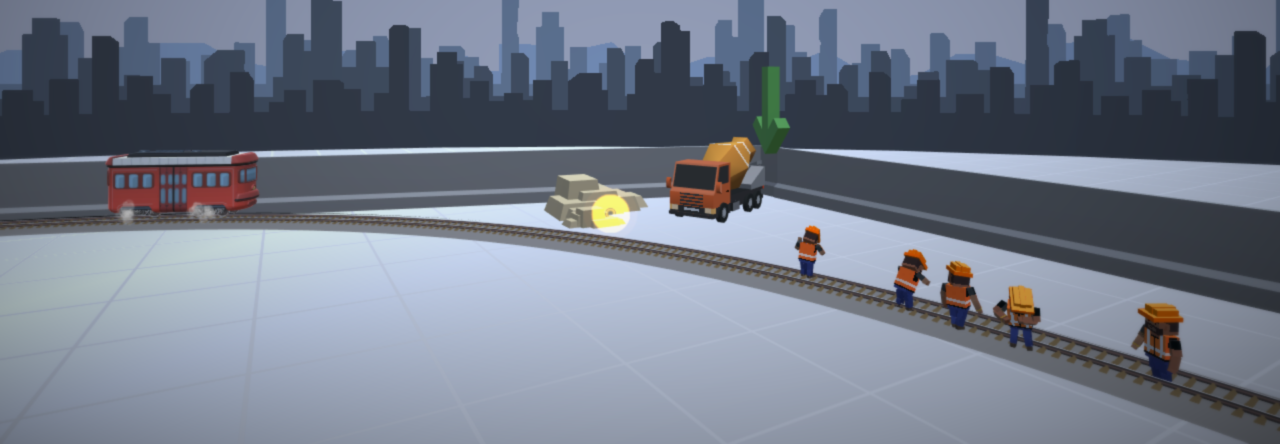
trains vs zombie

The second neat thing about game violence is that despite the rise of violent games actual crime has decreased. Hopefully this recent study will put to bed the myth that violent games cause people to be more violent.

Focusing on video game violence, Ferguson used the Entertainment Software Ratings Board (ESRB) to determine the violent content for the most popular video games between 1996 and 2011. Federal data on youth violence during the same time period was compared to ESRB-estimated violence content. Violent content in the most popular video games during these years was associated with a drop in youth violence. Ferguson stressed that this decline in youth violence was most likely by chance and not directly related to video game violence.

Finally, there is another new study suggests violent video games improve moral behaviour.

Led by Matthew Grizzard, an assistant professor at the University at Buffalo, and co-authored by researchers at Michigan State University and the University of Texas, this new study suggests that being bad in video games can lead players to think more about their real-life actions.

“Rather than leading players to become less moral, this research suggests that violent video-game play may actually lead to increased moral sensitivity,” says Grizzard. “This may, as it does in real life, provoke players to engage in voluntary behavior that benefits others.”

One reason I think it’s inportant to tackle issues around violence and video games is that educators and parents are worried about gaming in education as a result. So this research is good for all of us.

It’s all good news considering games are the future of education.

On Making Good (or Bad) Board Games

BoardGameGeek is a great website and community dedicated to board gaming. It’s the place I visit when I’m looking into cool new games. The site also has a list of the best and worst games based on user rankings.

I still have yet to play all of the games in the top 10 – I feel like the universe is actively trying to stop me from playing Android Netrunner. The top ranked game is Twilight Struggle which is a game about the Cold War. It’s an epic game and you ought to play it if you haven’t.

twilight struggle card

Over at Five Thirty Eight, Oliver Roeder did an analysis of Twilight Struggle and what it means to design the best board game on the planet.

It’s a good read and touches on a lot of points about good game design. The article even goes into what makes a game “good”. Some of it has to do with design and some has to do with appeasing the way people play games.

Simplification, to Gupta and Matthews, was the name of their design philosophy. Rather than overwhelm players with a fat rulebook at the start, the designers spread the information required throughout the gameplay, on cards. A typical Twilight Struggle card reads, “Truman Doctrine: Remove all USSR Influence from a single uncontrolled country in Europe.” The Twilight Struggle rulebook is a relatively slender 24 pages.


“You have to feel like something meaningful has been done in the game. You have to feel like the game had a beginning and had a middle and had an end, and that you were engaged,” Gupta said. You don’t, however, want to get burned out.

Twilight Struggle is also an educational game and I found knowing a bit more about the Cold War than other player’s put me at a slight advantage. You don’t need to know anything about history in order to play it though.

Over in Germany they are using another one of my favourite games, Battlestar Galactica, to teach aspiring diplomats ethics.

It’s an exercise named Project Exodus.

The fictional scenario is set aboard the Hesperios — a refugee ship seeking a new home after its worlds had been destroyed in a brutal war with machines disguised as humans.

The ship picks up an escape pod: It’s an event which brings the intergalactic war on board.

Nobody knows who is really on their side.

That’s it. From there the crew have to figure out for themselves how to expose and eradicate the evil among them.

In a follow up piece at Five Thirty Eight Roeder looks at the worst games ever made. It’s no shock to see Monopoly and The Game of Life where they are.

roeder-worstgames

What I like seeing is that Roeder connects the badness of these games to their overuse of luck. Damn that spinning wheel in Life and the monotony of rolling-and-moving in all those other games.

The worst games, for the most part, have one thing in common: luck. They’re driven by it, often exclusively. Candy Land, Snakes and Ladders (also called Chutes and Ladders) and War are driven purely by chance. The Game of Life is close. It’s heavily chance-based, but one can make some decisions.4 Overreliance on luck makes a game boring or frustrating or both. Good games are driven by skill, or, like Twilight Struggle, a healthy mix of skill and luck.

You should try your hand at making a board game at next year’s Board Game Jam!

Thanks to a ghost for the BSG Germany connection.

Page 22 of 262

Powered by WordPress & Theme by Anders Norén